
THE MORAL COMPASS
Where Values Shape Leadership
Siri’ Na Pacce As An Ethics Of Power: Preserving Dignity Amid Value-Driven Leadership


“The hardest part of leadership is not making big decisions, but consistently upholding values in the small ones.”

“Leaders may change, but values must be preserved so that civilization does not lose its direction.”
Within bureaucracy, power often appears in the form of numbers, regulations, and hierarchy. Yet true power is born from something far quieter: values. Values that are not written on organizational charts, but live in the daily conduct of a leader. It is there that one anchors oneself—to the Bugis-Makassar philosophy that has shaped civilization for centuries: Siri’ na Pacce and Lempu.
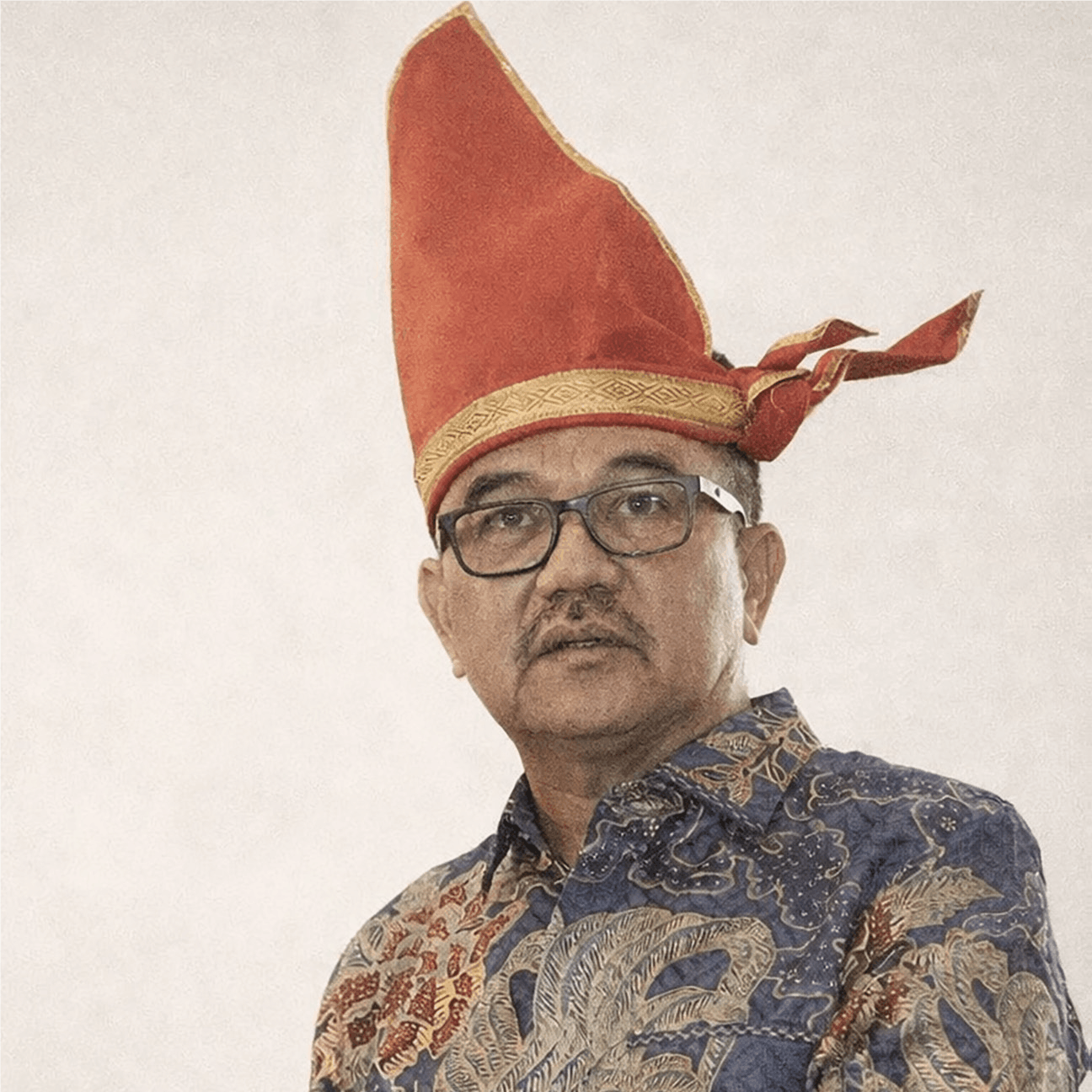
This is how the Chairman of DMDI South Sulawesi, Datuk Dr. Jufri Rahman, shared his perspective with DMDI Magazine—spoken in a calm, authoritative tone, rich with long experience as a leader in both bureaucracy and society, and shaped by deep intellectual maturity. Every word was not delivered to impress, but placed with full awareness, as if he understands that true leadership is not born from the noise of statements, but from the clarity of meaning. In his composed speech and modest demeanor, there is a clear conviction that power is not a goal, but a trust; not a stage for self-glorification, but a quiet space to uphold values, preserve dignity, and fulfill historical responsibility.
For Datuk Dr. Jufri, Siri’ is not merely personal pride, but a commitment to uphold the dignity of all those within the circle of decision-making. It is the awareness that every policy affects human beings, not just documents. Meanwhile, Pacce is the empathy that ensures a leader never forgets to humble their ego, to listen to concerns, and to understand the suffering of others—even when the decisions made are not always pleasing.
“Honor and empathy,” he said calmly, “are not moral ornaments. They are tools of navigation.”

“I believe more in leadership built on trust than on hierarchy.”
It is here that his leadership takes shape: not harsh, but firm; not sentimental, but humane.
Lempu: Non-Negotiable Integrity
In the modern bureaucratic world filled with pressure, compromise often comes disguised as rationality. Efficiency, interests, and targets are frequently used as reasons to loosen principles. However, for Datuk Dr. Jufri, Lempu—honesty and uprightness—is a foundation that must never crack.

“Pacce has taught me one thing: before making a decision, first listen to those who will bear its consequences.”
Honesty, in his view, is not only the courage to speak the truth, but also the willingness to admit mistakes and learn from them. He believes public trust is not built on a flawless image, but on consistent integrity.
“If we lose honesty,” he said, “we lose trust. And when trust is gone, leadership is nothing but a name.”
These values serve as his moral compass when facing policy dilemmas—when every choice carries consequences, and not all parties can be satisfied.
Leadership: Position or Values
His long experience in bureaucracy has taught one essential lesson: position grants authority, but values create influence. Leadership based on position relies on structure and command, while leadership based on values grows from trust, example, and personal integrity.

In the context of an organization like DMDI, Dr. Jufri chose the second path. He believes that cross-cultural and civilizational organizations cannot be driven solely by formal structures, but rather by shared values that are deeply internalized. “Values keep an organization alive,” he said, “even when its structures change.”
From Bureaucracy to Digital Leadership
His dissertation on digital leadership feels increasingly relevant today. For Datuk Dr. Jufri, digital transformation is not merely about technology, but about changing the way leadership is practiced—from a command-based model to collaboration, and from closed decision-making to transparent processes.
Digital leadership, in his view, requires leaders to become facilitators—not controllers of information. Yet amid the rapid pace and demand for efficiency, he reminds us that values must not be left behind.
In fact, in the digital space, respect in communication, empathy in responding, and honesty in conveying information become even more crucial—especially in an era of disinformation and hoaxes.
DMDI South Sulawesi: A Civilizational Nexus of Eastern Indonesia
In his work with DMDI, Datuk Dr. Jufri positions South Sulawesi not merely as an administrative region, but as a civilizational nexus. In the land of Bugis-Makassar, local values intersect with the long history of Malay-Islamic heritage. From there, networks in culture, economy, and leadership are developed to strengthen Eastern Indonesia.
His focus is clear: youth empowerment. Through training and development rooted in local values yet globally oriented, he aims to nurture a generation of leaders who remain grounded in their identity while being ready to compete in the modern world.

Reflections of a Leader
There have been moments in his leadership journey when values were severely tested—when pressure arose to sacrifice honor for efficiency, or honesty for comfort. In those moments, he chose the more difficult path: to remain steadfast.
For him, the greatest challenge is not the major decisions that attract public attention, but the small decisions that must be made consistently every day—when resources are limited, time is constrained, and expectations are high.
From this, he draws a deeper conclusion: leadership is not about heroic moments, but about the steadfastness to uphold values in daily routines.
A Message to the Younger Generation
To the younger generation, his message is clear and firm: technology may advance and the world may change, but values must never be abandoned. Be leaders who master technology while remaining rooted in honor, empathy, and honesty.
Because in the end, civilization is not measured by how advanced its systems are, but by the dignity of the people who lead it.