
THE LIVING MOSQUE
Smart Surau:
When Technology Becomes A Path Of Devotion Toward Obedience

“Surau (prayer houses) must not be left behind by the times, but the times must also be guided by values.”
In the city of Padang, dawn is no longer merely the transition from night to morning. It has become a civilizational moment. Amid the dew still clinging to leaves and the sound of children’s footsteps heading to the mosque, a movement is born—one that marries technology with values. A city is writing a new chapter: where digital screens no longer distance humans from God, but instead guide them back to the surau.
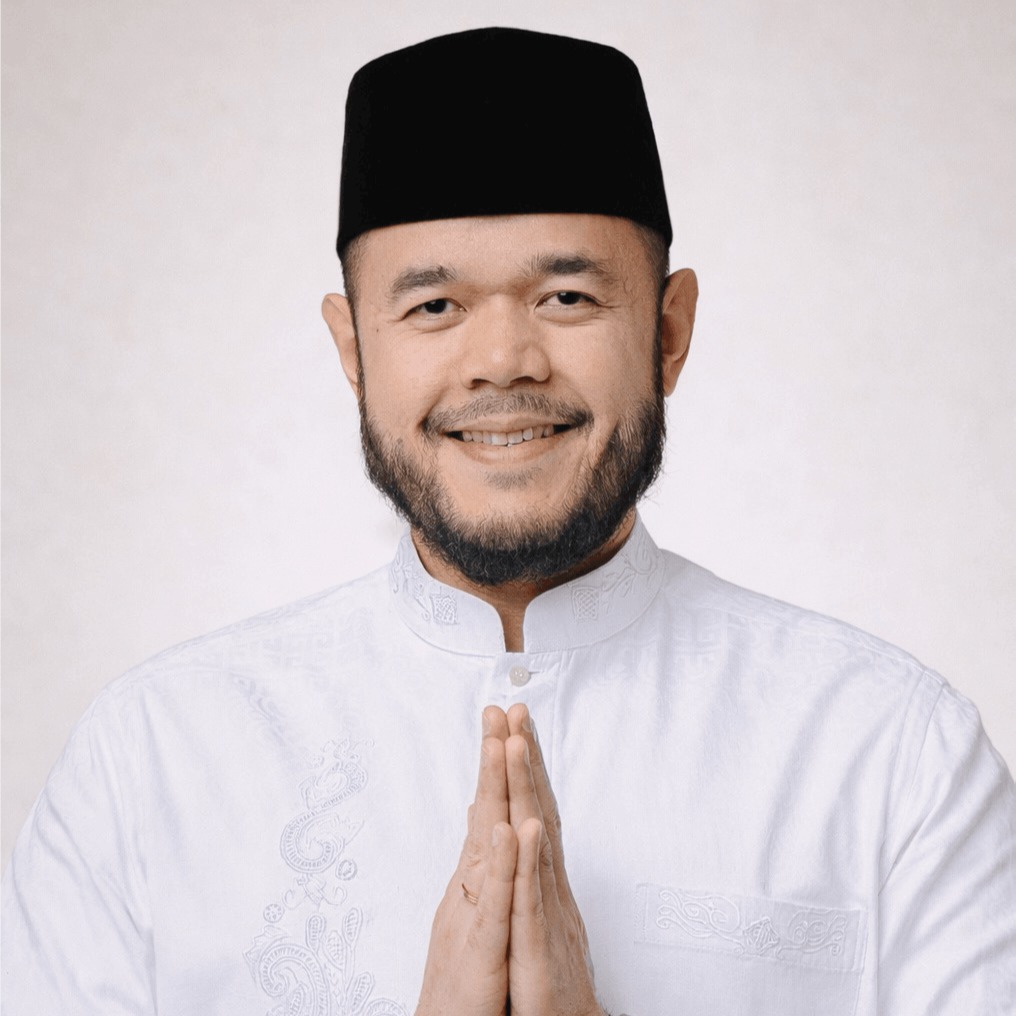
Padang’s vision as a smart, healthy city grounded in religion and culture is not just an administrative slogan hanging on meeting room walls. It is translated into a flagship program by the Mayor of Padang, Fadly Amran—bold and reflective: Smart Surau. This program is not merely about devices, networks, or attendance systems. It is about rebuilding the connection between the younger generation and places of worship, between modernity and meaning.
Amid the currents of globalization, often accused of distancing people from spirituality, the Padang City Government has chosen a different path. Technology is not seen as a threat to tradition, but as a new medium to strengthen faith.
“Technology is merely a tool. Its moral direction determines whether it distances or brings humans closer to God,” said Fadly, who also serves as Chairman of the World Malay World Islamic Association of West Sumatra.
Smart Surau is designed as a strategic innovation in mosque and prayer house management through digital integration. More than that, it is an effort to enliven mosques—reviving the pulse of congregations, bringing in the younger generation, and optimizing the role of surau as centers of worship, education, and social community activities.
Mosques are no longer understood merely as spaces for the five daily prayers. They become spaces for dialogue, learning, and growth. The surau once again becomes the heart of the community.
This commitment does not stop at ideas. The Padang City Government has gradually allocated around IDR 56 billion to support infrastructure development, capacity building for mosque administrators, and the development of Smart Surau support systems. This budget is not merely public spending, but a long-term investment in human quality.
The first activation that stirred the community was Subuh Mubarakah, launched on October 6, 2025. A movement that is simple yet rich in meaning and discipline: encouraging children to wake before dawn and walk to the mosque. Elementary students (grades 4–6) and junior high students (grades 7–9) are required to perform the dawn prayer in congregation at nearby mosques or prayer houses.
Here, discipline is built not through harsh enforcement, but through habits that gradually take root. Children learn that success is not only about academic intelligence, but about commitment to values.
To ensure transparency and accuracy, the Department of Communication and Informatics introduced a QR Code–based attendance system. Each student scans a barcode as proof of presence. The data is collected, monitored, and evaluated.
Yet behind this digital system lies something immeasurable: the habit of waking before sunrise, encounters with fellow worshippers, and spiritual experiences that leave a lasting imprint on the heart. Dawn carries a deeper meaning.
Within the first three months, out of a target of 80,000 students, 53,000 had participated in Subuh Mubarakah across 1,523 mosques and prayer houses throughout Padang. This figure is not merely a statistic; it is a signal that change is underway.
“If dawn becomes a witness to your habits, then the future will become a witness to your steadfastness.”
The second activation of Smart Surau touches on early religious education through revisions to the MDTA and MDTW curricula. Qur’anic learning is brought back to mosques and prayer houses, strengthening the relationship between children and places of worship within their own communities.

“Mosques are no longer understood merely as spaces for the five daily rituals. They become spaces for dialogue, learning, and growth. The surau once again becomes the heart of the community.”
The 3T concept—Tahsinul Qur’an, Tafsirul Qur’an, and Tahfidzul Qur’an—serves as the foundation: reciting correctly, understanding deeply, and memorizing with love. Education is no longer merely the transfer of knowledge, but the transformation of the soul.
The government also provides incentives for MDTA/MDTW and TPQ/TQA teachers amounting to Rp600,000 per month—an acknowledgment that religious educators are guardians of light who often work quietly behind the scenes.
The third initiative is the digitalization of mosques and prayer spaces through the provision of digital learning environments. Tablets, free WiFi, and educational facilities are introduced gradually, starting from city-level mosques down to neighborhood levels. Surau are brought into a technology-based learning ecosystem. Here, two worlds meet: scripture and screen, tradition and innovation.
“Surau must not be left behind by the times, but the times must also be guided by values.”
The fourth initiative, Remaja Masjid Reborn, aims to revive youth energy as the main driver of religious and social activities. Youth mosque organizations are strengthened, supported with funding, and encouraged to create innovative programs. Young people are no longer just spectators, but active participants. The mosque becomes a space for self-actualization, not merely a place to pass through.
The implementation of Smart Surau, according to the Mayor, is carried out in a structured manner through the formation of task forces from the city level down to neighborhoods. Collaboration is built with the Indonesian Mosque Council (DMI), Ruangguru, school teachers, and educational staff. Cross-sector synergy forms the foundation for sustainability.
Yet above all systems and regulations, there is one primary force: the community. Support from parents, religious scholars, traditional leaders, and community figures provides the moral legitimacy for this program. Smart Surau grows not from instruction, but from collective awareness.
National recognition has followed. Smart Surau received a Special Award at the Indonesia Smart Nation Awards (ISNA) 2025. This award marks that development based on values and technology can go hand in hand, even strengthening one another.
“An excellent generation is not born from comfort, but from habits built from an early age.”
On New Year’s Eve, December 31, 2025, during a Tabligh Akbar, the Padang City Government presented awards to the best schools, students with perfect attendance, and outstanding mosques. Bicycles and Tabanas savings were given not merely as prizes, but as symbols of appreciation and motivation.
“An excellent generation is not born from comfort, but from habits built from an early age.”
The Mayor of Padang emphasized that the strength of a city lies in its human resources. The envisioned generation is not only intellectually capable but also strong in faith and piety. In line with the vision of Indonesia Emas, Padang aspires to nurture a generation that excels in science and technology (IPTEK) while remaining steadfast in faith and devotion (IMTAQ).
Smart Surau, in the end, is not merely a government program. It is a narrative about how a city dares to blend modernity with spirituality—about how technology can be directed to strengthen values rather than erode them.
Between glowing screens and prayer mats laid out in devotion, the city of Padang is showing that the future does not have to abandon its roots. On the contrary, it is from strong roots that technology finds its direction. And perhaps, in every barcode scanned at dawn, what is recorded is not only a student’s attendance—but also the presence of hope.